Particularly in evangelical and charismatic circles, we often hear Jesus described as “worthy.” This adjective shows up commonly in contemporary Christian music. Think of Michael W. Smith’s Agnus Dei. (I really like that song, by the way.)
Here’s another version of Agnus Dei for my high-church friends:
But do we really know what we mean when we use this term?
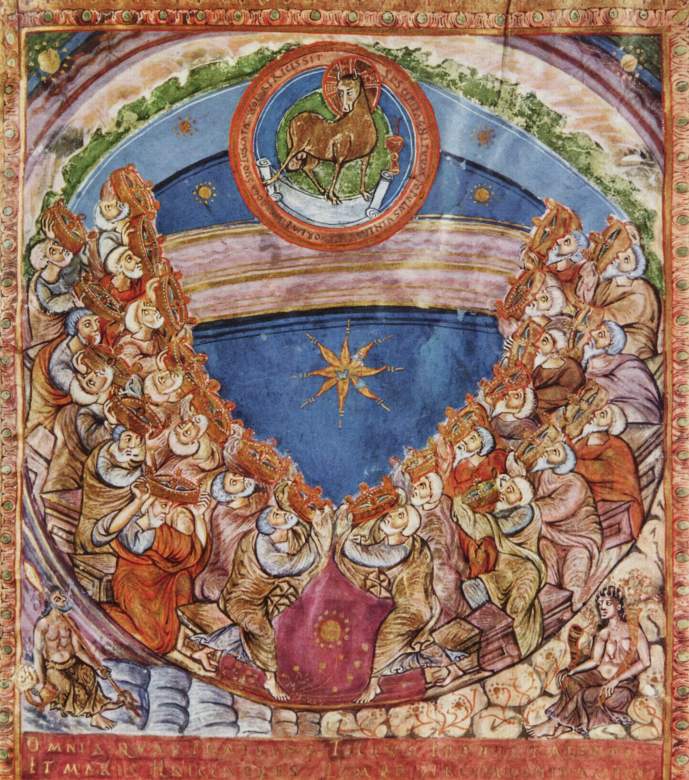
Consider this passage from Revelation 5: 6-14:
Then I saw between the throne and the four living creatures and among the elders a Lamb standing as if it had been slaughtered, having seven horns and seven eyes, which are the seven spirits of God sent out into all the earth. He went and took the scroll from the right hand of the one who was seated on the throne. When he had taken the scroll, the four living creatures and the twenty-four elders fell before the Lamb, each holding a harp and golden bowls full of incense, which are the prayers of the saints. They sing a new song: “You are worthy to take the scroll and to open its seals, for you were slaughtered and by your blood you ransomed for God saints from every tribe and language and people and nation; you have made them to be a kingdom and priests serving our God, and they will reign on earth.” Then I looked, and I heard the voice of many angels surrounding the throne and the living creatures and the elders; they numbered myriads of myriads and thousands of thousands, singing with full voice, “Worthy is the Lamb that was slaughtered to receive power and wealth and wisdom and might and honor and glory and blessing!” Then I heard every creature in heaven and on earth and under the earth and in the sea, and all that is in them, singing, “To the one seated on the throne and to the Lamb be blessing and honor and glory and might forever and ever!” And the four living creatures said, “Amen!” And the elders fell down and worshiped.
No one is worthy to open the scroll except for the lamb who had been slaughtered–Jesus. And Jesus is worthy to open the scroll because he was slaughtered and by his blood ransomed men and women from every tribe, language, people, and nation. He made out of them a new people and nation, a kingdom of priests. In other words, Christ’s sacrifice on the cross was the ultimate work of salvation for humankind, and only by virtue of this sacrificial act could one be worthy to open the scroll.
In his book, The Theology of the Book of Revelation (Cambridge UP, 1993), Richard Bauckham claims that the central question of Revelation is, Who is really lord of this world? Almost everyone in the Roman world would have said that the emperor was lord. The early Christians, however, had a different answer. They knew the identity of the one true Lord. They knew who was “worthy” to be praised. This passage from Revelation 5 depicts for us the heavenly acknowledgement of Jesus as the one who is worthy above all others.
 David F. Watson
Excellent article! K. Mann
Kitty Mann jameskittymann@aol.com
Vicit Agnus noster, eum sequamur!
Reblogged this on Kingdom Pastor and commented:
Some excellent words for my culture and nation. I thought some of you might get something from them if you are not following David.
very well said, but I am a big fan of your blogs. All I can say is AMEN, Blessings Dr Watson