My last post generated some strong reactions. Thanks to those of you who took the time to provide constructive feedback and keep the conversation going. Many of you told me that our unity in the UMC is not simply located in our polity but in Jesus Christ. Jesus is what unites us.
I want to believe this is true, but the theological pluralism embedded in the “Theological Task” section of the 1972 Discipline has had long-lasting and far-reaching effects. Nevertheless, for the sake of conversation, Iet’s drill a bit deeper into what it might mean to be united in Christ.
It’s safe to say that virtually all people who call themselves Christian regard Jesus as in some way important. But why is he important? To put things in fairly broad categories, Christians have claimed that Jesus is important because of (a) who he is (b) what he has done, and (c) what he will do.

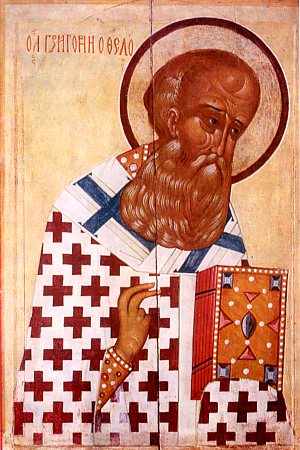 Most Christians, following the Roman Catholic and Orthodox traditions of the Church, have affirmed that Jesus was the incarnate Second Person of the Trinity. This statement of who Jesus is cannot be separated from what he has done and what he will do. Jesus has atoned for our sins, made it possible for us to be reconciled to God, and will come again in judgment. His incarnation is essential for our salvation because, as Gregory of Nazianzus put it, “that which he has not assumed, he has not healed.” Put differently, for God to heal the sinful and broken nature of humankind, it was necessary for God to take on the nature of humankind. Only in Christ could the perfection of God and the brokenness of humanity be united. Athanasius put the matter positively: Christ became human that we might become “gods.” In other words, in the divine-human union, all humankind was given the opportunity to be transformed into the likeness of Christ and live forever in harmony with the Triune God.
Doctrine is a delicate matter. It is rather like a game of Jenga. As you begin to remove pieces of the structure, it becomes ever less stable. One piece relies on another piece, and with the removal of just a few key ideas, the entire system becomes incoherent. In other words, the structure tumbles.

Photo by Guma89, courtesy Wikimedia Commons athttps://commons.wikimedia.org/wiki/File:Jenga_distorted.jpg
To help stabilize the structure of our affirmations about God’s saving work in Jesus Christ, the Church developed creeds, the two most important of which are the Nicene Creed and the Apostles’ Creed. Consider the second article of the Nicene Creed:
We believe in one Lord Jesus Christ,
the Only Begotten Son of God,
born of the Father before all ages.
God from God, Light from Light,
true God from true God,
begotten, not made, consubstantial with the Father;
through him all things were made.
For us men and for our salvation
he came down from heaven,
and by the Holy Spirit was incarnate of the Virgin Mary,
and became man.
For our sake he was crucified under Pontius Pilate,
he suffered death and was buried,
and rose again on the third day
in accordance with the Scriptures.
He ascended into heaven
and is seated at the right hand of the Father.
He will come again in glory
to judge the living and the dead
and his kingdom will have no end.
A more basic Christological summary can be found in the Apostles’ Creed. Jesus Christ is:
[the] only Son [of the Father], Our Lord,
Who was conceived by the Holy Spirit, born of the Virgin Mary, suffered under Pontius Pilate, was crucified, died, and was buried.
He descended into Hell; the third day He rose again from the dead;
He ascended into Heaven, and sitteth at the right hand of God, the Father almighty; from thence He shall come to judge the living and the dead.
Okay… maybe we can leave out the “descended into hell” part…. This affirmation has a complex history and has found its way in and out of the Apostles’ Creed many times, depending upon the community of faith in which the creed was recited.
But we all affirm the other parts, right?
[*Crickets]
I mean, after all, the affirmations of these creeds are presupposed in the Articles of Religion, one of our doctrinal standards within The United Methodist Church. Consider Articles II and III:
Article II – Of the Word, or Son of God, Who Was Made Very Man
The Son, who is the Word of the Father, the very and eternal God, of one substance with the Father, took man’s nature in the womb of the blessed Virgin; so that two whole and perfect natures, that is to say, the Godhead and Manhood, were joined together in one person, never to be divided; whereof is one Christ, very God and very Man, who truly suffered, was crucified, dead, and buried, to reconcile his Father to us, and to be a sacrifice, not only for original guilt, but also for actual sins of men.
Article III – Of the Resurrection of Christ
Christ did truly rise again from the dead, and took again his body, with all things appertaining to the perfection of man’s nature, wherewith he ascended into heaven, and there sitteth until he return to judge all men at the last day.
And we must not forget about the affirmations of that oft-neglected part of our United Methodist tradition, the Evangelical United Brethren, which gave us the Confession of Faith:
Article II – Jesus Christ
We believe in Jesus Christ, truly God and truly man, in whom the divine and human natures are perfectly and inseparably united. He is the eternal Word made flesh, the only begotten Son of the Father, born of the Virgin Mary by the power of the Holy Spirit. As ministering Servant he lived, suffered and died on the cross. He was buried, rose from the dead and ascended into heaven to be with the Father, from whence he shall return. He is eternal Savior and Mediator, who intercedes for us, and by him all men will be judged.
 David F. Watson
I’m of the opinion that even though I may not believe what the Scripture or the doctrines of the church say, that does not make them any less true. God’s Truth stands on it’s own and doesn’t need my opinion to verify it. On the one hand, my experience of the living Christ and His healing power, may convince me that what the Scripture says and the doctrines of the church say is truth. On the other hand, my lack of experience of the living Christ and His healing power may convince me to believe otherwise. Whole denominations have built doctrines steming from their lack of experience of things reported about in Scripture as truth.
Hello postmodernism
Right… the idea that truth resides within an individual or an interpretive community is a recent development, and not a good one.
I don’t think David Watson is suggesting we try to round up all the stray cats (within or without) the denomination, but he is saying there truly is a historic consensus that envelopes the identity of Jesus Christ, and we find it expressed in canonical Scripture, our Articles of Religion, the historic creeds and in the teachings of the Church Fathers. The sectarians among us may refuse this consensus, preferring their own ricochets and accents (“short blankets and narrow beds”); and so we have what we have: United Methodists speaking a muddled message via multiple voices talking at once in downright contradiction and chaos.
I meant to reference Isaiah 28:20 (“bed too short, covering too narrow”)…
That’s pretty much on target, Gary.
When I first read MacIntyre’s After Virtue and the story of moral incoherence pictured therein, I thought, “That looks like my United Methodist Church’s doctrinal state!” Your Jenga picture can work too.
There seems to be an error here to take “Jesus is what unites us.” to mean “Orthodox Christology is what unites us.” While I cannot claim to know what is in the heart and mind of each and every person who has uttered “Jesus is what unites us”, I like to imagine that they are speaking of the Jesus who called Peter, Andrews, James, and John who joined their lives to his though they littler understood what they were getting themselves into. I imagine they are speaking of the Jesus who came into a locked roomed of fearful and doubting disciples offering them peace that is the presence of the Risen Christ. I imagine they are speaking of the Jesus whom Paul encountered on the Damascus road though he only had hatred for Christians in his heart. What I am saying is, perhaps there is a living, risen Lord Jesus who has united us to himself through our baptisms and thus has united us one to another, however much each of us is guilty of projecting a more palatable Christ onto him. I say this as someone who does believe that orthodox Christology, soteriology, and the historic creeds are all vital to the life of the Church and the UMC. I do, however, shudder to think of us placing our human logoi in the place of the living, active, and un-containable Logos who is Jesus himself.
David, thanks for your contribution to this discussion. I don’t disagree with what you’ve said. But I’d also ask, is the Jesus whom you described also the one who came to us enfleshed, atoned for human sin, and rose from the dead? These are important matters. While I would not want to substitute an intellectual construct of Jesus for the living Jesus, I do think that the set of claims we make about Jesus is important, and it is something to which we need to attend.
I agree with Dr. Watson’s perspective on nearly every point of this conversation about the state of “unity” in our church. Here are my thoughts and comments on the United Methodist Church and our “bed in which we lay”, the upcoming General Conference 2016…
So much is being said after many annual conferences have had their elections for delegates to General Conference 2016 in Portland. Because of my extensive involvement in General Conferences over the last 23 years working behind the scenes, I have been thinking about the status of our church and reflecting on where we have been and where we are going…history and future… (Note: I am an Elder serving in the Oklahoma Annual Conference, on the Board of Ordained Ministry, and a 4th generation Methodist, great grandson of one of the first women ordained Deacon in West Oklahoma, 1941.)
I have been to General Conference in ’92 (Louisville), 2000 (Cleveland), 2004 (Pittsburgh), 2008 (Ft. Worth), and 2012 (Tampa)…
Wow! What an experience!
Because of that potent experience, I can speak voluminously about the issue of “unity” in our church…or sadly, the lack thereof…
The theme for General Conferences 1996 was “In Essentials, Unity…In Non-Essentials, Liberty…In All Things, Charity… The irony is stunning in the use of this wonderful quote from St. Augustine in the face of the deepening divide and “fracturing” of our church! I have sensed that the use of this theme represents a pervading unsettledness among delegates and visiting observers, even a panic in desire for this theme to be true…but all in the face of constant evidence that it was not true… This reality was often seen in the divide over homosexuality or abortion, but also in the life of worship, the perspective of vision for mission and ministry, and in choosing priorities for fiscal expenditures.
I have often felt that while homosexuality was often the “presenting issue”, the real source of division could be found in competing differences in world-view that exist in our church: the doctrinal, philosophical, and theological differences concerning the Christian understanding of Revelation…How has God chosen to reveal the Divine to us…The Written Word (Scripture) and The Living Word (Jesus)…
These differences impact our “being and our doing” and have become “irreconcilable”…
The themes of subsequent General Conferences tell of the same painful panic and longing for unity…
2000 – “We Who Are Many
Are One Body”
2004 – “Water-Washed –
Spirit-born”
2008 – “A Future with a Hope”
2012 – “Making Disciples of
Jesus Christ for the
Transformation of
the World”
With each quadrenium, I can tell you that the sense of contentious division and conflict has only grown…
Conviction of belief and commitment to action on both sides has only deepened and hardened.
Next year, what is the theme of General Conference?…”Therefore, Go!” My sense is that one cannot “go” anywhere when one is hopelessly “stuck”.
The problem in our church is that there are deep foundational irreconcilable differences in how different groups of people choose to understand Divine Revelation, the Written Word and the Living Word, Jesus. Some…many…have rejected these understandings altogether. One of the main differences in that understanding is this:
Christians have believed for centuries that through the gift of Scripture (Old & New Testaments) and the birth, life, death, and resurrection of Jesus Christ, God has given and completed in full, Divine Revelation. The work of the Holy Spirit is to bring understanding to that completed Revelation.
However…
Today in the United Methodist Church, there are many who reject the understanding that God’s Divine Revelation is completed… Rather, they believe that new Revelation is continuing, that the Canon of Scripture is not final nor authoritative. And they do not necessarily accept Jesus as divine, miraculous, authoritative, atoning, or even historical. And in their understanding, the role of the Holy Spirit is to deliver to us this new Revelation.
All this came out in official dialogue in 1996 between 22 participants. Maxie Dunnam and 10 others represented the orthodox, classically Wesleyan, evangelical perspective, and Bishop Judith Craig and 10 others represented the progressive, liberal perspective.
I do remain hopeful because I cling to the words of the angel to Mary, “For nothing is impossible with God!” May God of Heaven and Earth truly help us…
Blessings in Christ!
Very good points…. There does seem to be a kind of cosmetic unity at the level of the GC, one that does not really reflect the state of the denomination.