 The latest proposal for dealing with the crisis in The United Methodist Church is now public (here). The so-called “local option,” as David Watson called it here, leaves local congregations to determine whether “they will, or will not, allow for homosexual marriages or unions.”
This proposal would turn us into congregationalists. Methodism’s connectionalism is one of the hallmarks of who we are. It’s in our DNA. Connectionalism also locates us squarely in the one, catholic, and universal Church. The idea of leaving to each congregation how it will settle this important and sensitive question reconfigures Methodism significantly, and formalizes an institutional version of ancient Israel’s chaos: “all the people did what was right in their own eyes” (Judges 21:25).
The United Methodist Church has gradually chipped away at its connectional polity in numerous ways over the last 40 years. This latest proposal now completes the process, officially bringing to an end our connectionalism. This would essentially create a congregationalist polity, at least on this single issue of same-sex practices. Of course, UM local churches are free to engage in diverse ministries in their own individual ways. That is as it should be. But it would be another matter to surrender our unambiguous witness with regard to human sexuality to each congregation. We would be justified in asking further if local congregations would eventually develop and publish their own “position papers” on other topics as well.
This move to congregationalism forsakes our Catholic > Anglican > Methodist heritage, and moves toward a nonconformist, independent, and in some ways, baptistic polity. But the proposal raises another question for me. And that question has to do with Methodism’s “Trust Clause,” which has been part of our identity for 217 years. In light of the “local church” option in this latest proposal, it is important for Methodists to hear again the details of our Trust Clause. The opening paragraph is entitled “Requirement of the Trust Clause for All property,” and opens as follows (Book of Discipline, parag. 2501).
“All properties of United Methodist local churches and other United Methodist agencies and institutions are held, in trust, for the benefit of the entire denomination, and ownership and usage of church property is subject to the Discipline. This trust requirement is an essential element of the historic polity of The United Methodist Church or its predecessor denominations or communions and has been a part of the Discipline since 1797. It reflects the connectional structure of the Church by ensuring that the property will be used solely for purposes consonant with the mission of the entire denomination as set forth in the Discipline. The trust requirement is thus a fundamental expression of United Methodism whereby local churches and other agencies and institutions within the denomination are both held accountable to and benefit from their connection with the entire worldwide Church.”
The next paragraph identifies this trust as an essential feature of the UMC’s organization as a “connectional structure.” One of the salient features of the trust clause is the idea that all properties are held in trust for the entire UMC to ensure that their usage is subject to the Book of Discipline. And so it has been for American Methodism since nearly the very beginning, only a few years after the Christmas Conference of 1784. This “fundamental expression of United Methodism” is intended to hold local churches, as well as the UMC boards and agencies, accountable to the whole church, in order that they may benefit from the connectionalism. This is a way of ensure that we as a denomination speak as one voice on the most important issues of our day.
At the very least, this new proposal, the “Way Forward” document, would require significant changes to the Trust Clause. I believe it would necessitate changing the Trust Clause beyond recognition, and with it, Methodism as we know it. If local congregations have the freedom to decide whether its buildings and properties will be used for same-sex weddings, the logical corollary is to remove the Trust Clause altogether. Why maintain the appearance of Methodist connectionalism? If each congregation determines the proper use of its buildings and properties, why then shouldn’t that congregation have full ownership of those properties? Anything less is thralldom, pure and simple.
I offer these comments merely as a thought experiment, in order to illustrate the numerous problems with the “Way Forward” proposal as it relates to the central identity of what it means to be Methodist. My question is a simple one. If we accept the “local option” in this latest proposal, why wouldn’t we also simply drop the Trust Clause from Methodism altogether?
To be clear, I do not support either of these ideas. I hope neither of them happens. I will not be signing the “Way Forward” document, nor do I support removing the Trust Clause.
Instead, I hope we will develop proposals that will empower the Council of Bishops to hold its members accountable to their vows. We might also find ways to help clergy who are unhappy with our church’s stance on human sexuality to exit our system gracefully, and to suspend the Trust Clause for local churches who cannot in good conscience uphold our Social Principles. But for now, at least, I do not support calls for amicable separation, nor do I support this latest “local option” proposal. We must keep thinking and praying together as connectional United Methodists who can no longer ignore the dysfunction in our body, in order to find solutions that do not strike at the root of Methodism itself.
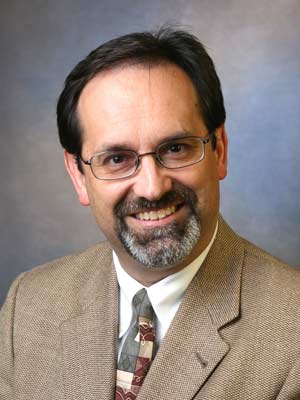
Bill T. Arnold is an elder in the Kentucky Annual Conference, and professor of Old Testament Interpretation at Asbury Theological Seminary. He recently published Seeing Black and White in a Gray World: The Need for Theological Reasoning in the Church’s Debate over Sexuality (Franklin, Tenn.: Seedbed, 2014).
 David F. Watson
“But it would be another matter to surrender our unambiguous witness with regard to human sexuality to each congregation. We would be justified in asking further if local congregations would eventually develop and publish their own ‘position papers’ on other topics as well.”
I ask the following as someone who does not support the Hamilton/Slaughter 2.0 plan, and is orthodox on the sexuality issue: How do we have an unambiguous witness, save on paper, and do we not have local congregations issuing position papers now?
Yes. Why this one issue? Why not allow me to re-baptize at my local church? Why not allow the church to be just a believer’s baptism church? Why not allow me to teach a reformed doctrine?
And why is no one mentioning how poorly this has gone for the PCUSA or UCC?
No matter how this comes out, it is time to allow churches and pastors to re-up. Some will want to opt out given such a change and they should be allowed to do so, should there remain one church with a PCUSA polity.
I find it a shame that we have made “congregationalist” into a derogatory label, and have devolved to name-calling in this debate. This parallels the game in worldly politics where right wing politicians homogonise all non-right wing proposals into the category “socialism” then are free to dismiss them all out of hand. The “A Way Forward” proposal does make some decisions about homosexual ethics depend on the congregation, but this would only make the UMC “congregational” in polity if issues of homosexual ethics were central to our identity. I lament that we appear to have made this so true.
Thanks for your comment, Kevin. I’m not using “congregationalist” as a derogatory label. Rather, I simply don’t think it’s a Methodist way of doing church. It’s fine for nonconformist denominations, but it’s not part of our Anglican-Methodist heritage. And I agree that same-sex practices shouldn’t be central to our identity. But our Social Principles in general are central to our identity. The call to set aside one topic in our Social Principles and to let local congregations establish their own positions on the matter is not my idea. I also lament our fixation on this topic.
Ahh, so you only mean “congregationalist” to sound negative if we are in a Methodist context. Quite helpful. To that, I suppose we can add you suggestion now that the advocates of “A Middle Way” should belong to a “nonconformist denomination.”
I encourage you to look more carefully at the wide range of issues that we do leave to individual ministers, congregations, and members of the church. Do you think that we deny ordination to people because they disagree on any issue in the Social Principles? Do we deny marriage to soldiers because the Discipline finds the practice of war to be “incompatible with the teachings and example of Christ.” How dare we allow some Churches to have rituals celebrating soldiers service while others favor absolute pacifism. This must be CONGREGATIONALISM! (I recognize this label is absurd, but name-calling always is).
But on a deeper level you miss the point, the goal is not, so far as I can tell, to set aside the Social principles, it is to revise the Social Principles to reflect the reality of ongoing faithful and reasonable disagreement.
Kevin, I’m sorry that my comments appeared to be speaking past or around you. That is not my intent. I only mean that congregationalism is not derogatory for those denominations that are truly congregationalist by intent. And I mean “nonconformist” in the church-history way; that is, nonconformism is part of the church tradition & history that relates to congregationalism. I’m trying to say, apparently not very well, that such nonconformist congregationalism is not our history and not our self-understanding. But that, in my view, the latest proposal actually does make us congregationalist on this issue.
And you raise excellent questions about other issues important to us in our Social Principles. I promise to continue thinking about them more deeply. At this stage, I would only respond that we certainly have latitude on issues like pacifism vs justifiable warfare because we intend latitude on that issue. So, for example, the Social Principles state that war is “incompatible” (165C), as you observed, while we also admit that there are times when Christians believe the force of arms may be used (164I). In other words, our Social Principles are intentional about such latitude. In this case, our latitude is connectional and church-wide. Local churches may stress one portion of the spectrum over others, but we’re all United Methodists, and together, we have decided that we want such latitude in our connection. We do not allow individual churches to set policy individually on issues of pacifism versus justifiable warfare. To do so on any other issue, such as sexual ethics, would be to set aside our connectionalism.
My life, ministry and the congregation I serve will go on whatever the United Methodist Church finally decides to do. But if “do your own thing” is the price of unity in the connection, I’m not sure I understand the point of the connection. Perhaps we should just confess that we operated out a fine model that seems to have outlived its usefulness, give blessing to “do your own thing on your own property” and see what happens next. Let me quick to add that I am personally supportive of unity through the United Methodist Discipline, but that seems to be outmoded thinking.
Pingback: Hamilton on the local option | John Meunier